Payroll Process Improvement: Build Controls Before Payday
Improve payroll controls, approvals, payment checks, STP and super status, ledger posting, and reconciliation across your existing systems.
Contact us
Why does every payday turn into chaos?
It’s not just that the clock seems to tick faster as each pay run gets closer to the deadline. Issues always seem to come to the surface, no matter how hard the finance team tries to prevent them.
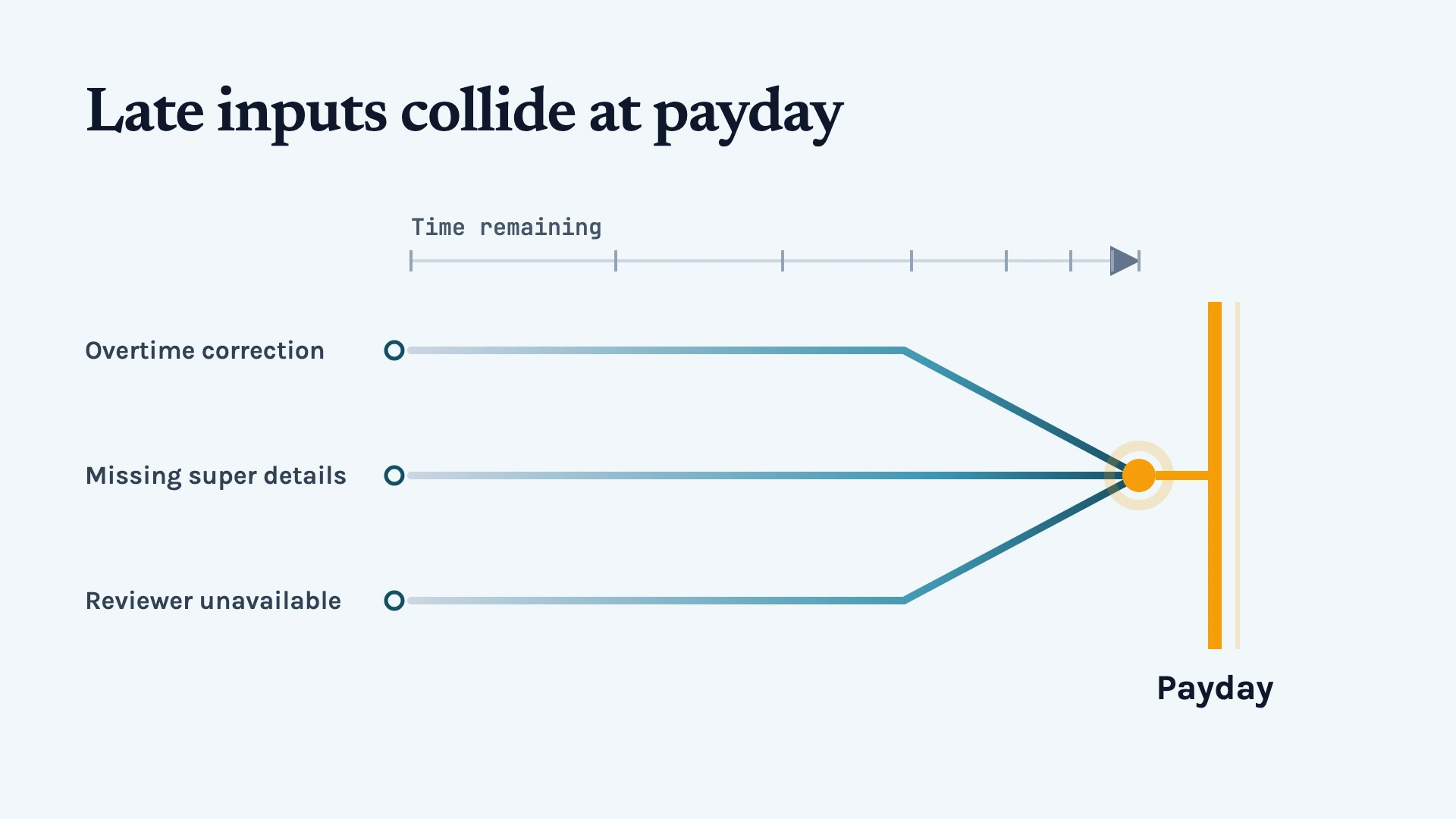
At that moment, one manager sends a late overtime correction. A new starter still has incomplete super details. The person who usually reviews the pay run is unavailable, while payday is only hours away.
By that point, the team is doing far more than processing payroll. They are chasing information, working out which version is final, deciding which change belongs in this run, and making sure nothing important has been missed.
If something slips through, the work continues after payday. The team handles correction requests, follows up on STP or super status, and explains ledger differences during month-end close.
This is why payday can feel like a nightmare every month, even when the payroll software produces the right net pay. So, how can you make payday less chaotic for your finance team?
It all starts long before payday
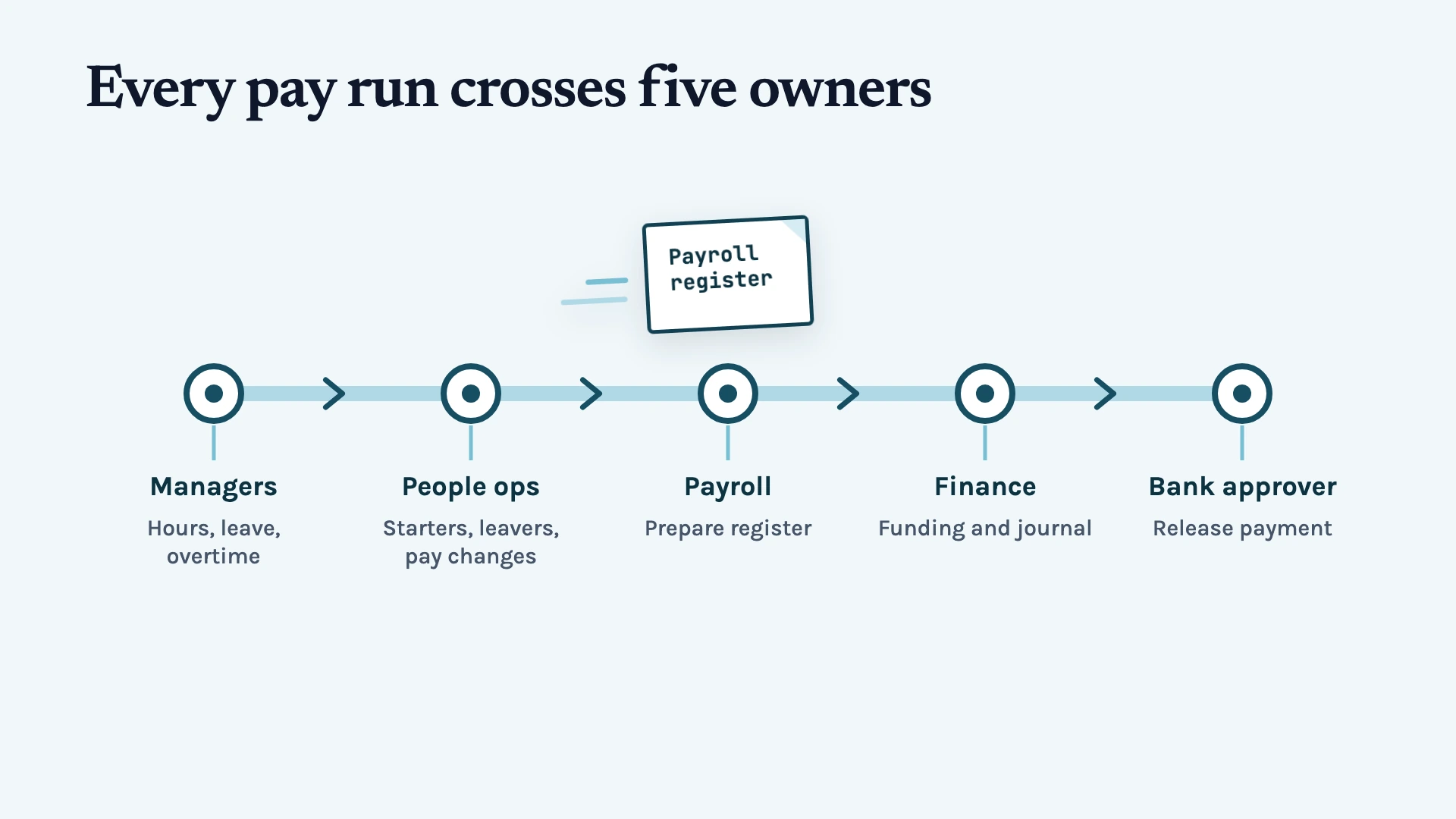
Every pay run has several owners. Managers confirm hours, leave, and overtime. HR or People Operations manages starters, leavers, and pay changes. Payroll prepares the register. Finance confirms funding and checks the journal. A separate bank approver releases the payment.
When everyone knows what they need to provide, when it is due, and who can approve an exception, the work can move smoothly. But when updates arrive through email, chat messages, or verbal requests, they can trigger chaos on payday. Payroll staff become the people who chase missing decisions and rebuild the story at the last minute.
That’s where a payroll workflow becomes valuable. It brings clear cut-offs, approved sources, visible exceptions, and a review that puts the right information in front of the right person before payment is released.
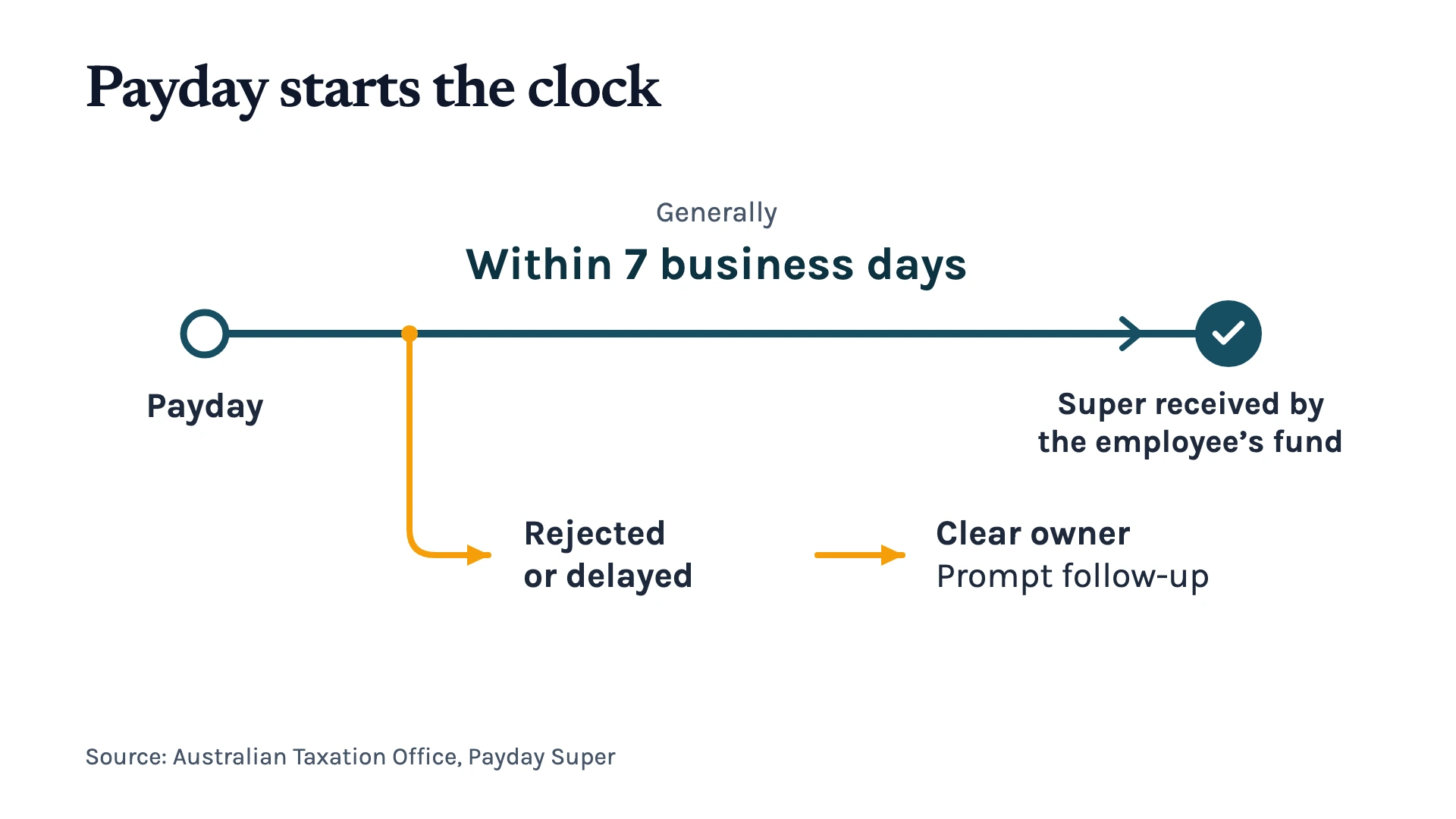
This becomes even more important under Payday Super. From 1 July 2026, employers need to pay super for each payday, with contributions generally reaching the employee’s fund within seven business days after payday. When a contribution is rejected or delayed, the team needs a clear owner and prompt follow-up before it becomes a bigger problem.
Payroll also sits within the wider finance workflow. Its journals and liabilities feed into month-end close and reconciliation, while payment approvals work best alongside the same separation-of-duties principles as accounts payable workflows.
A better payroll process starts with the workflow
Payroll process improvement starts with a clear view of how work moves across your team before, during, and after every pay run.
We can trace selected recent pay runs from employee and time changes through the payroll register, approval, bank payment, STP status, super contributions, journal posting, and reconciliation. This shows which parts of the workflow already support your team and where staff need to repair problems outside the system.
From there, we can design a clearer workflow, configure the systems you already use, and create tailored integrations where a recurring hand-off needs more support.
Design the Workflow
We create a clearer payroll calendar, input cut-offs, approval points, backup owners, and escalation paths. We also define the evidence required for employee and pay changes, along with a single way to track missing, late, rejected, or disputed items.
Configure Your Existing Systems
Your current HR, time, payroll, banking systems, super, and accounting systems may already have useful controls available. We can help configure role access, approval workflows, required fields, audit logs, variance reports, journal schedules, and exception reporting to support the process your team needs to follow.
Add Custom Integrations Where They Are Needed
When a recurring hand-off creates manual effort, errors, or missing evidence, we can design a tailored integration between approved HR or time data, payroll, banking, super, and accounting systems. Each change needs a clear source, mapped fields, and visible exception handling so the team can act before payday or reporting deadlines.
Scope and boundaries
Depending on the agreed scope, your team may receive practical tools that support each stage of the pay run:
- a map of the current payroll workflow and review of selected recent pay runs
- a findings register that shows the root causes behind recurring issues
- a future-state workflow and controls matrix
- payroll calendars, change and exception procedures, and reconciliation checklists
- configuration and integration recommendations for your current systems
- an implementation backlog, testing plan, and training materials where implementation is in scope
With these foundations in place, your team has a clearer view of the whole pay run, including whether inputs arrived by the cut-off, which changes still need approval, and who needs to follow up on an exception. Then, when it is time to release the payment, the team can check the approved register against the bank file and follow STP, super contribution status, journal posting, and reconciliation through to completion.
Progress is measured using evidence from your own pay runs. This may include on-time inputs, approval timing, correction or off-cycle rates, unresolved exception age, rejected STP or super items, and payroll-to-bank or reconciliation differences. The same measures can be reviewed after a change, giving your team a like-for-like view of what has improved.
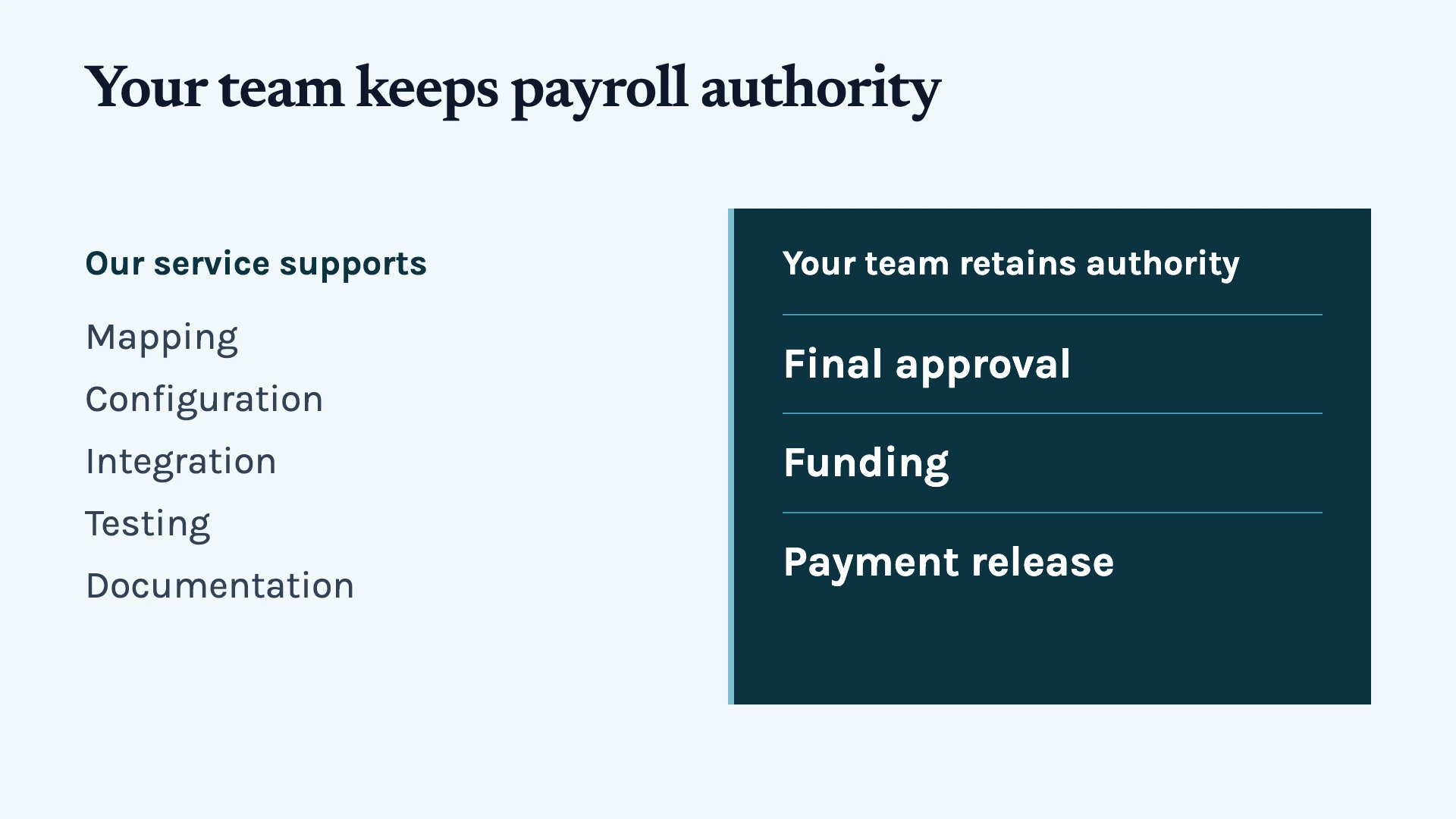
Your team stays in control of the important payroll decisions: employment decisions, approved pay rules, final approval, funding, and payment authority. We focus on mapping, designing, configuring, integrating, testing, and documenting the workflow that supports those decisions. Questions about award interpretation, employee classification, tax positions, and historical remediation belong with the right qualified adviser.
Let’s start with the pay run that needs attention
So, which part of your payroll workflow needs more attention? Maybe it is a late overtime correction, an approval that arrives too close to payday, a super contribution that needs follow-up, or payroll figures that keep raising questions during month-end close.
Let’s take a look at it together. We can map the workflow around that problem, identify where the hand-offs need more support, and work out the next practical change for your team.
Related guides
View payroll guidesWhat Should a Payroll Approver Actually Review Before Signing Off?
Learn what to review in a payroll approval process, including pay variances, headcount changes, overtime, new starters, terminations and payroll controls.
5 Signs Your Payroll Process Needs Improvement
Learn about 5 signs your payroll process needs improvement, from late inputs and payday corrections to STP errors and single-person dependencies.
What Is Payroll Reconciliation and Why Does It Matter?
Learn what payroll reconciliation is, what it checks, how to handle discrepancies, and how payroll automation can strengthen payroll controls and accuracy.