Payroll Process Improvement for Australian Payroll Firms
Improve your payroll workflow with clearer inputs, approvals, exceptions and reconciliation across the systems your Australian payroll firm already uses.
Contact us
One small payroll change can be a nightmare for your team
Especially when it happens close to payroll.
A new employee starts. Someone changes their hours. A timesheet comes in late. A termination needs to be processed. An allowance needs checking.
None of these changes should be unusual. But the pay run has a deadline. When information arrives late or an exception needs more attention, your team can end up waiting for the right input, approval or answer before payroll can be finalised.
And the problem doesn't stop at getting the pay run out on time.
Payroll and compliance firms are responsible for managing a much wider workflow, from the first employee or timesheet input through to approval, payment, reporting and reconciliation. That means a process that relies too heavily on manual chasing, scattered information or individual knowledge can create pressure across the entire operation.
Payday Super adds another layer to your payroll workflow
By now, your firm should already know about Payday Super.
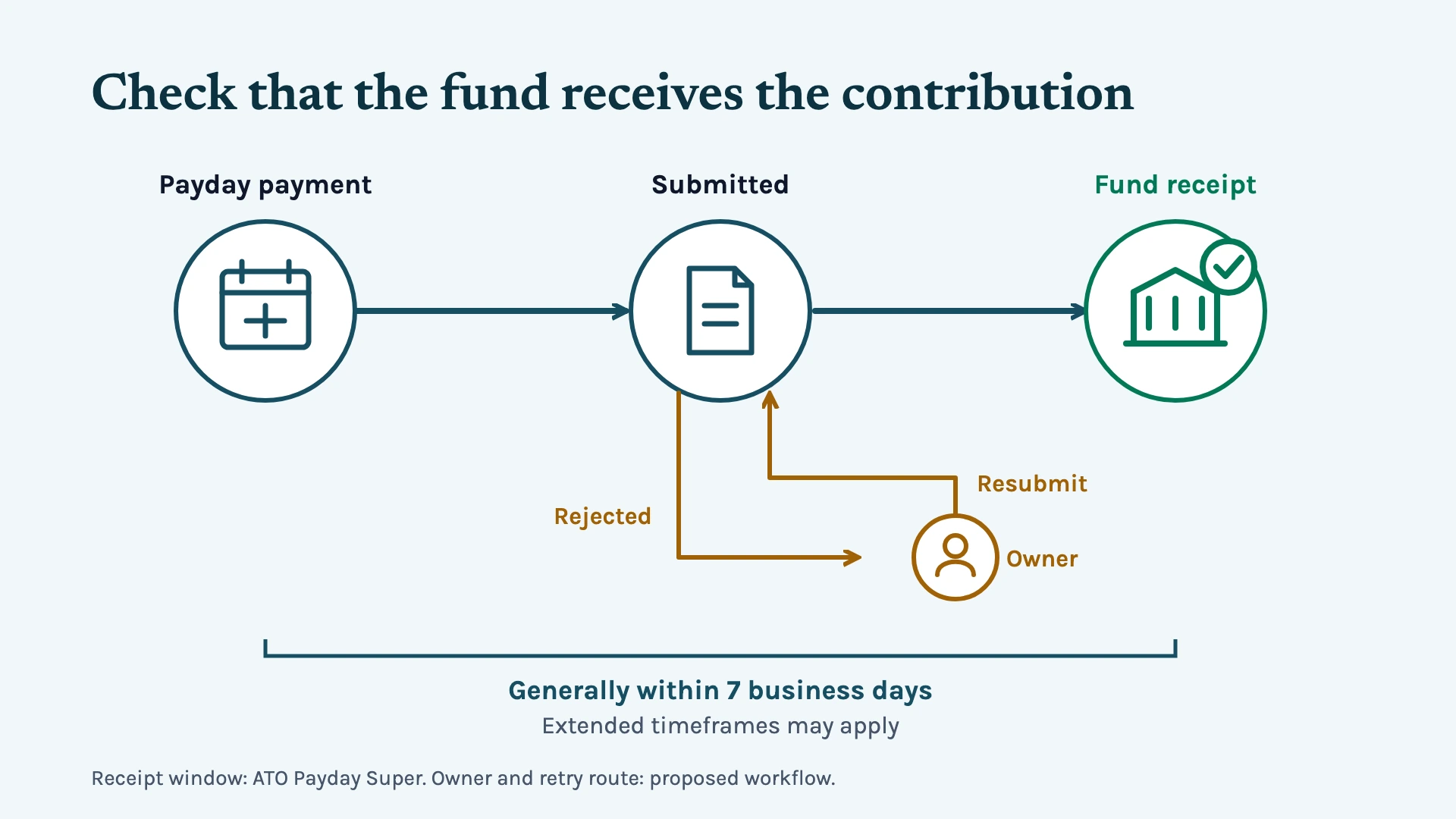
From 1 July 2026, Payday Super changes the timing of super obligations around payday. Employers generally need contributions to reach employees’ super funds within seven business days after payday. For payroll firms that manage this process as part of their service, this means the workflow needs to account for the additional timing, checks and follow-up involved.
The employer remains responsible for its statutory obligations, but your team may be responsible for operating parts of the process under the agreed scope. The workflow should therefore give your team clear ownership of the additional checks and follow-up, with enough visibility to see where each contribution stands and what needs attention.
With these controls in place, Payday Super doesn’t have to become another task your team manually chases. The required checks and follow-up can sit within the wider payroll workflow alongside approvals, payment checks, STP and reconciliation.
The only thing you need to watch more closely is how your payroll process needs to know what has been approved, what has been submitted, what has been received, and what happens when something fails.
This is how we can improve your payroll process
When it comes to improving, it’s not always about adding more tools or taking people out of the workflow. It’s about putting the right controls around the work that needs to happen before, during and after payday.
That means looking at where payroll information comes from, how changes are approved, what happens when something doesn’t look right, and how the final payroll connects back to payment, STP, super and the ledger.
Good payroll controls should make these steps easier to track, review and reconcile — rather than leaving your team to piece everything together after the fact.
Start with the workflow around payday
Map the process from the moment payroll inputs arrive to the point where the completed run is reviewed, paid and reconciled.
Look for where your team has to chase information, make manual decisions outside the system, repeat checks or repair a hand-off between systems. These are the points where a clearer process or control may be needed.
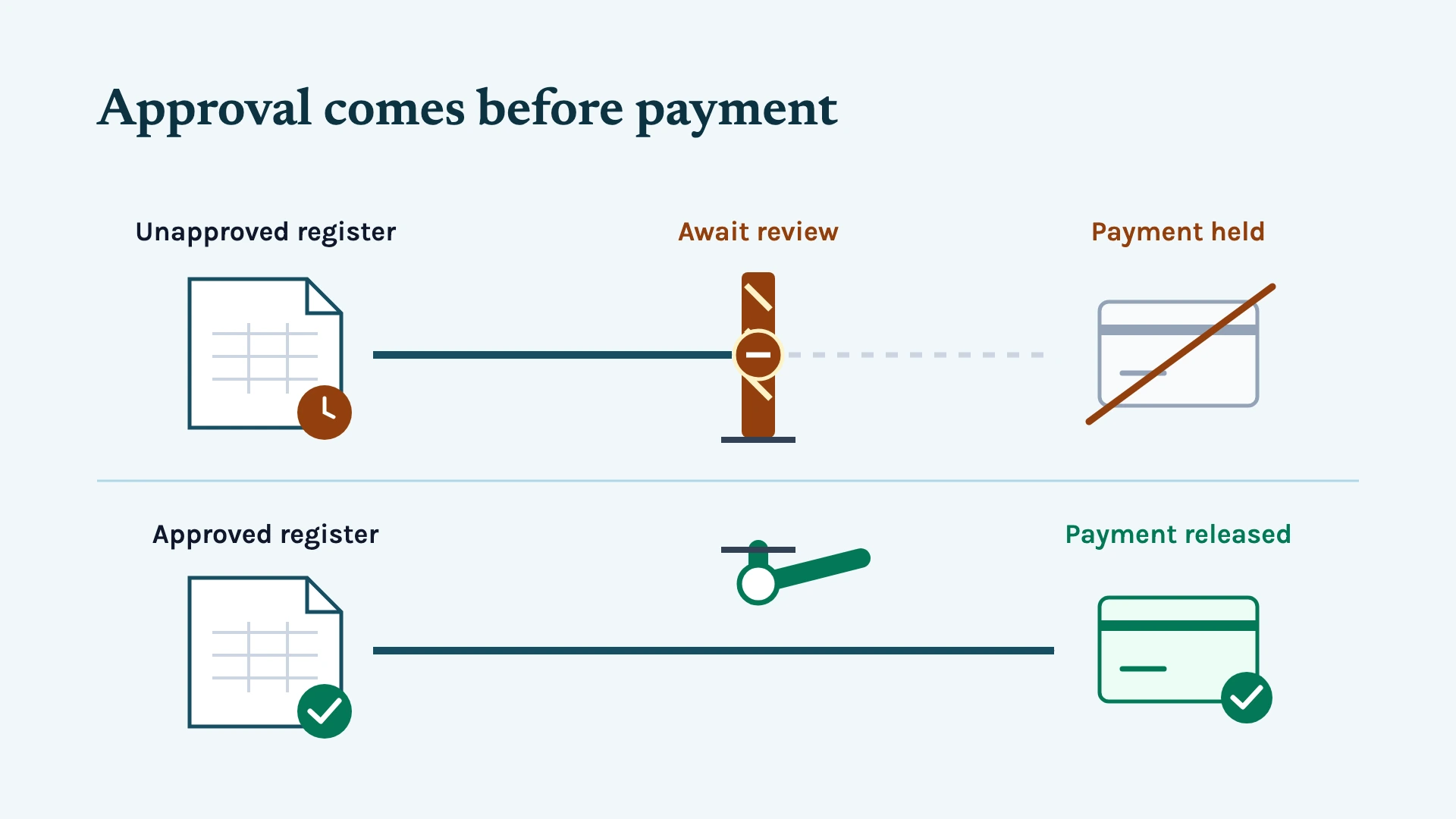
The workflow should show what happens at each stage, who owns it and what needs to be completed before the next step can begin. For example, approved timesheets and employee changes should reach payroll before the agreed cut-off, while the completed payroll register should move through review and approval before payment is released.
Put controls around payroll inputs
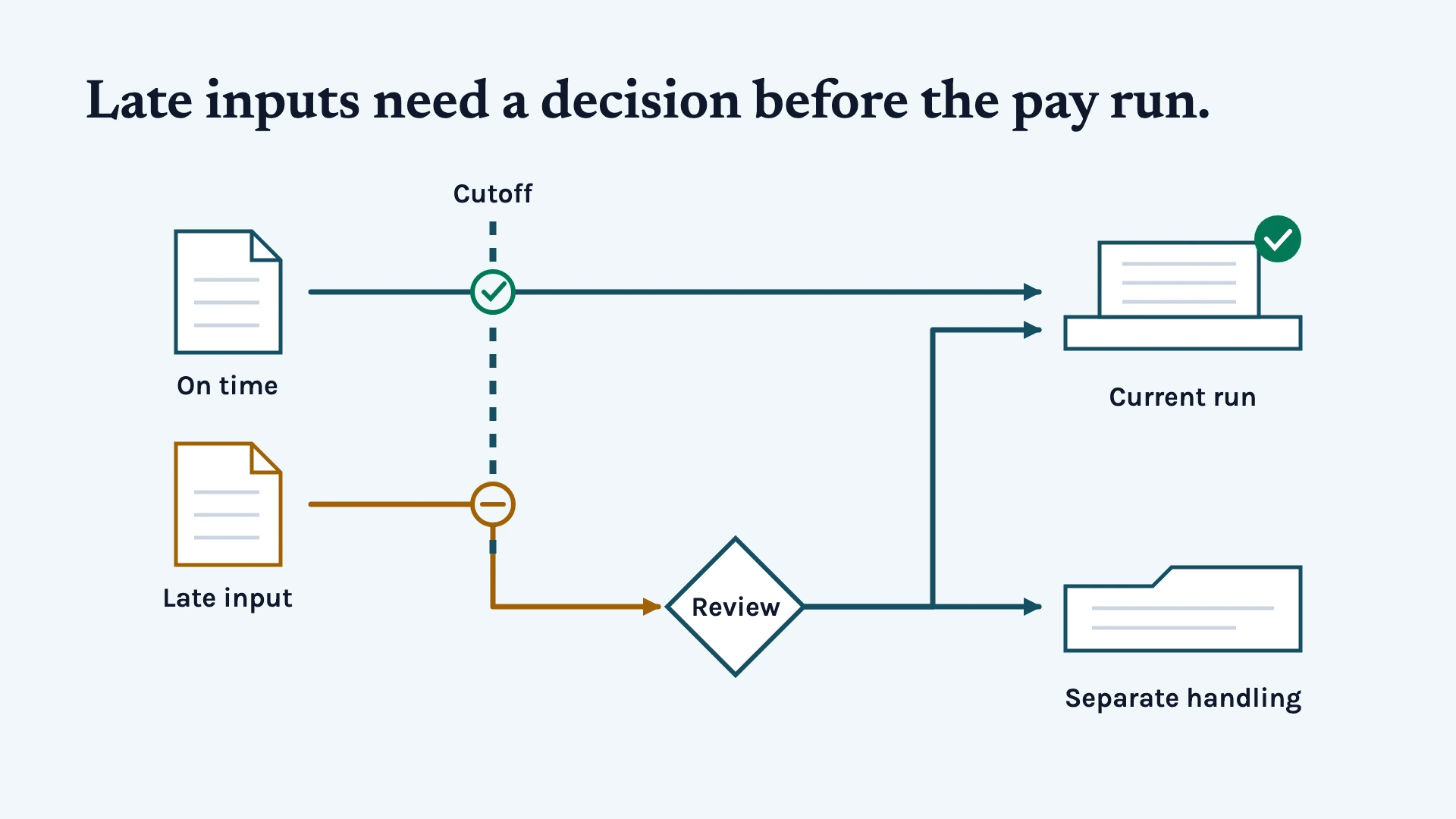
Set clear cut-offs and approved ways to submit timesheets, leave, employee changes and other payroll information.
This can include starters, leavers, changes to hours or pay, deductions, allowances and other information that can affect a pay run. The aim is to make it obvious what has been received, what is still missing and who needs to act before the payroll deadline.
It also helps to define what happens when information arrives after the cut-off. Instead of making a last-minute decision each time, your team can follow an agreed process for assessing whether the change belongs in the current run or needs to be handled separately.
Make approvals and exceptions visible
Not every payroll change should follow the same path. Define who reviews pay changes, exceptions and the final payroll register, and what happens when an item is late, rejected or needs further investigation.
Backup owners and clear escalation paths also help prevent the process from depending on one person being available at the right time.
Connect the process across your systems
Payroll rarely operates on its own. Whether your firm uses Xero, MYOB, Employment Hero or another payroll platform, HR, time tracking, payroll, banking, super and accounting systems all contribute to the process.
Where information needs to move between them, make the hand-off clear and reduce unnecessary manual work. Where the existing systems can be configured to support the workflow, the process should use those capabilities.
If an integration is needed, it should have a clear source, destination and way to surface exceptions when something doesn’t go as expected.
Close the loop after payday
The payroll process doesn’t end when employees are paid.
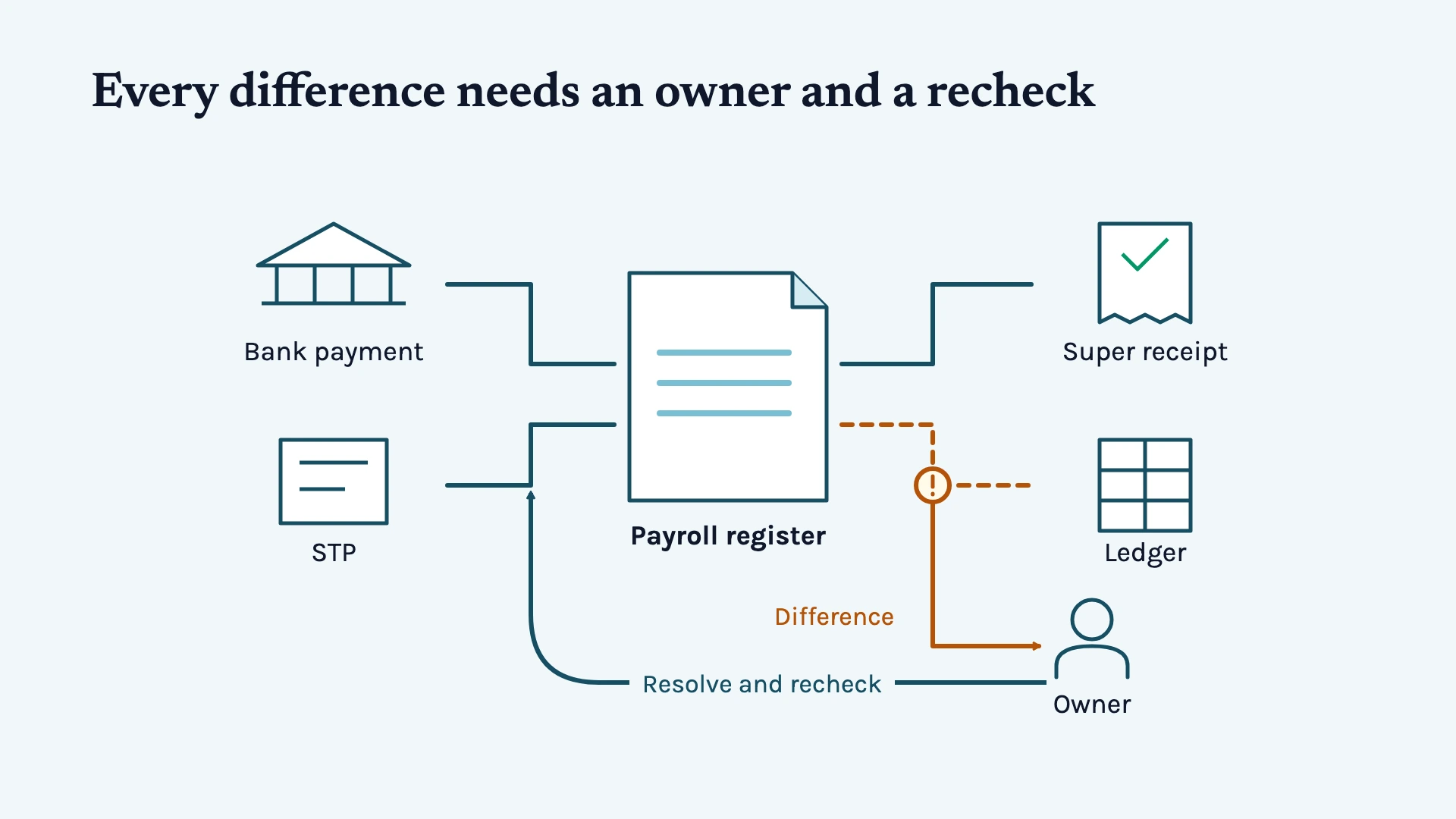
STP, super, bank transactions and payroll journals still need to be checked against the completed run and reconciled. Any rejected, delayed or unexplained item should have an owner and a path to resolution.
The same applies to corrections. If an issue keeps appearing across pay runs, it shouldn’t become another recurring task for the payroll team. Tracking correction rates, unresolved exceptions, approval delays and reconciliation differences can help show where the underlying process needs attention.
The goal is to build a more reliable payroll process where the controls help do the chasing for you — making the next action, responsible person and exception visible before a small change turns into a payday problem.
Make your payroll process easier to control
If your team is spending too much time chasing payroll inputs, fixing hand-offs, checking the same issues or dealing with last-minute changes, it may be time to look at the process behind the pay run.
Let us help you map the workflow, identify where controls are missing, and work out what can be improved across your existing systems and processes — so you can build a process your team can rely on, even when something changes close to payday.
Want to see what’s holding your payroll process back? Get in touch now and let’s see what we can do for you.