Canonical Naming
Learn how canonical naming defines entity boundaries in Retrieval-Augmented Generation and knowledge graphs, improving retrieval and reasoning.
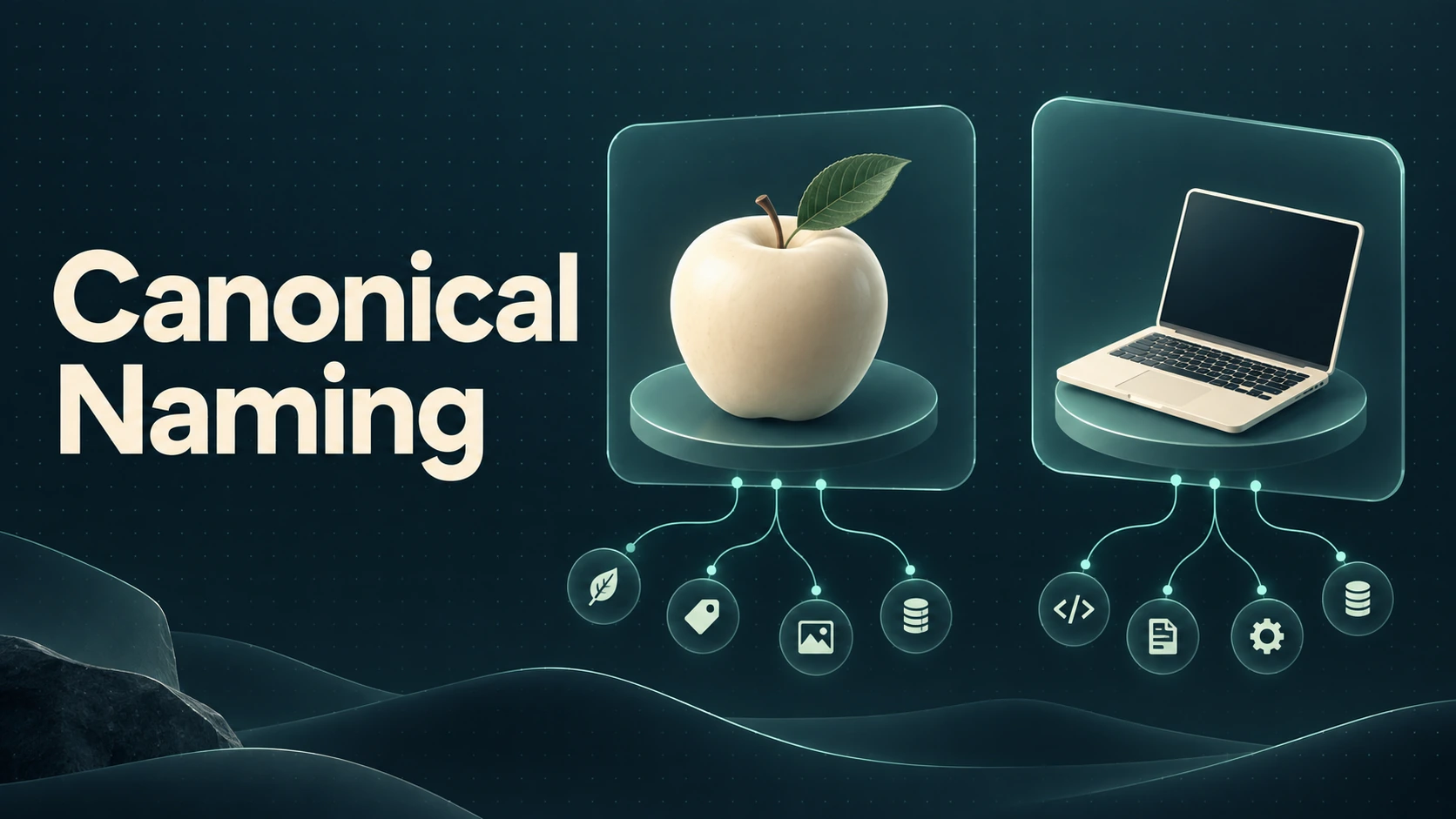
Canonical naming in RAG systems
Canonical naming is a way for AI systems, particularly in graph-based Retrieval-Augmented Generation (RAG), to distinguish between similar but fundamentally different concepts. For example, in “An apple a day keeps the doctor away” vs. “Apple just released a new MacBook Air”, the word Apple means entirely different things. Canonical names help AI understand these distinctions by defining semantic boundaries in the vector space, grouping related concepts under a single entity while keeping unrelated meanings separate.
The specificity of these boundaries is user-defined, meaning a system can treat “Apple company,” “Apple iPhone,” and “Apple MacBook” as either part of the same entity or as separate entities based on how fine-grained the naming is. A broad canonical name might group all Apple products together, while a narrow one might separate them into MacBooks, iPhones, and Vision Pro. This flexibility allows metadata and attributes like speed, simplicity, and price to be attached at the appropriate level—company-wide, product-wide, or model-specific.
In short, canonical naming is how AI system creators define entity boundaries, deciding how generalized or specific a concept should be, which in turn shapes how the system categorizes, retrieves, and processes information.
Keep up with what I'm working on
I'll send you occasional emails about new articles, tools and offers that could help with your business.