Manage More Properties With Better Workflows
Improve your property management workflow with clearer approvals, connected systems and suitable automation as your portfolio grows.
Contact us
Your property management team sits in the middle of everything
And it means the workload grows with every property you take on.
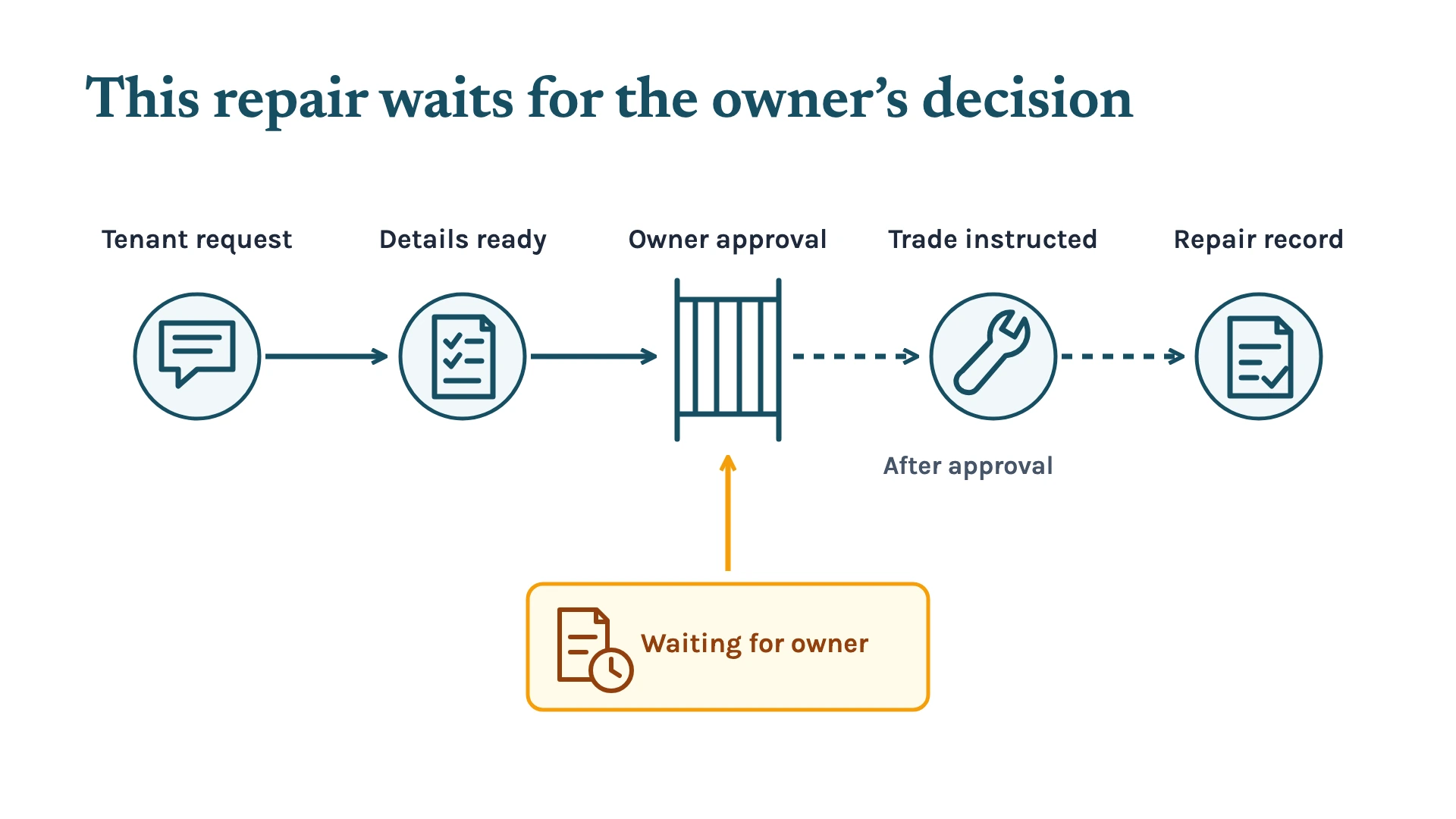
Your team needs to handle a maintenance request that requires an owner decision before a trade can be instructed. A completed repair then needs to flow through to the right property records and financial information. An owner statement needs to reflect what happened, while your staff may have to collect documents, allocate transactions or reconcile information across different systems.
These processes can become harder to manage when information is spread across property management, accounting, maintenance and other systems, or when staff have to rely on emails, manual updates and repeated data entry to keep everything moving.
That’s why adding more staff or handing more responsibility over to your software isn't always the answer. Your property management firm may need to improve the workflow around your existing systems, so your team has a clearer way to manage recurring work, hand-offs and exceptions while keeping property management decisions and approvals with the people responsible for them.
Improve your existing systems, not replace them
Property management platforms such as PropertyMe or Reapit can support much of that day-to-day work, while accommodation-focused platforms such as Resly can connect reservations, payments, distribution and owner access.
But having the right systems in place does not automatically make the workflow work.
Your team may still need to move information between property and accounting systems, check whether an approval has been received, chase a missing document or manually update the next step after a maintenance request.
The opportunity may therefore be less about replacing your software and more about improving how your existing systems support the way your firm operates.
To start improving the workflow around your existing systems, we look at:
Workflow design
We map the workflow from the first trigger to the point where the work is completed. This means following what actually happens when a maintenance request comes in, an owner needs to approve an expense, or a property-level transaction needs to be allocated and reconciled.
From there, we identify who owns each step, what information they need to move it forward, where an approval or decision is required, and what happens when the work does not follow the usual path. These points can show where the workflow needs a clearer hand-off, better control or a different way of handling exceptions.
Software configuration
Your property management system should support your workflow, not force your team to build workarounds around it.
We can review and configure the systems you already use so the right information, tasks and steps are available where your team needs them, rather than relying on workarounds outside the system.
System integration
A firm may have a core property management platform alongside accounting, maintenance, document, payment, communication or booking systems. Platforms such as PropertyMe, Reapit, Resly and BookingTrust illustrate how different parts of property and financial operations can sit across connected systems.
Integration can help information move between relevant systems without your staff repeatedly entering, checking or copying the same information.
That’s particularly useful when property activity needs to connect with financial records, maintenance information needs to reach the right property record, or documents need to be available at another stage of the workflow.
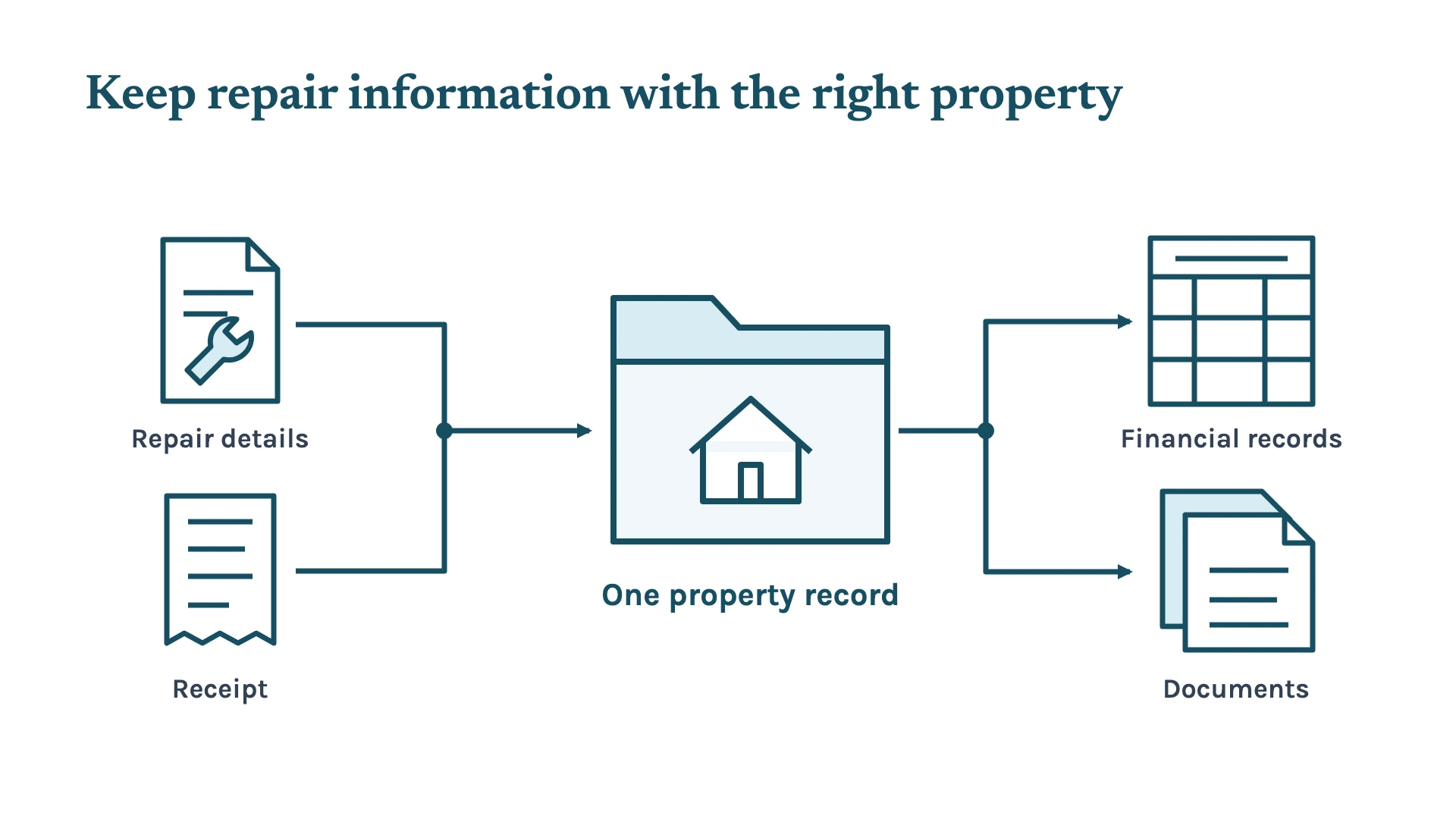
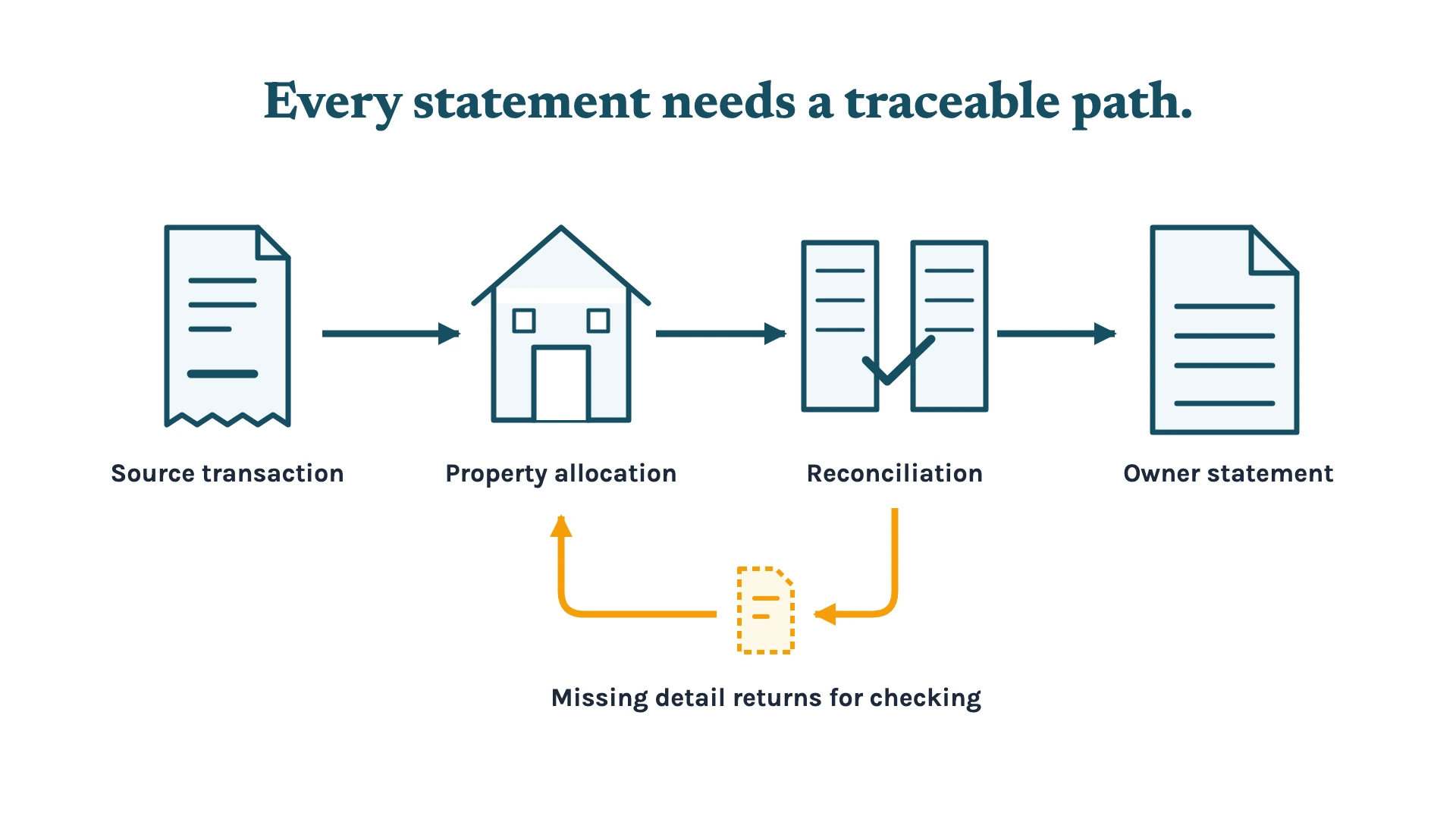
The same applies to owner reporting. Property income, authorised expenses, management fees and other deductions may need to be reflected in the right property and owner records before a statement is prepared. A clearer workflow can help your team trace how that information moves from the original transaction through allocation and reconciliation to the final report, rather than relying on manual checks across several systems.
Automation
Once the workflow is clear, suitable recurring steps can be automated.
This could include creating tasks when an event occurs, sending notifications, routing documents, updating statuses or triggering the next step in a process. Other common workflow examples include checklists, templated messages, payment matching, scheduled statements and booking confirmations.
The important part is deciding what should be automated and what should remain with your team.
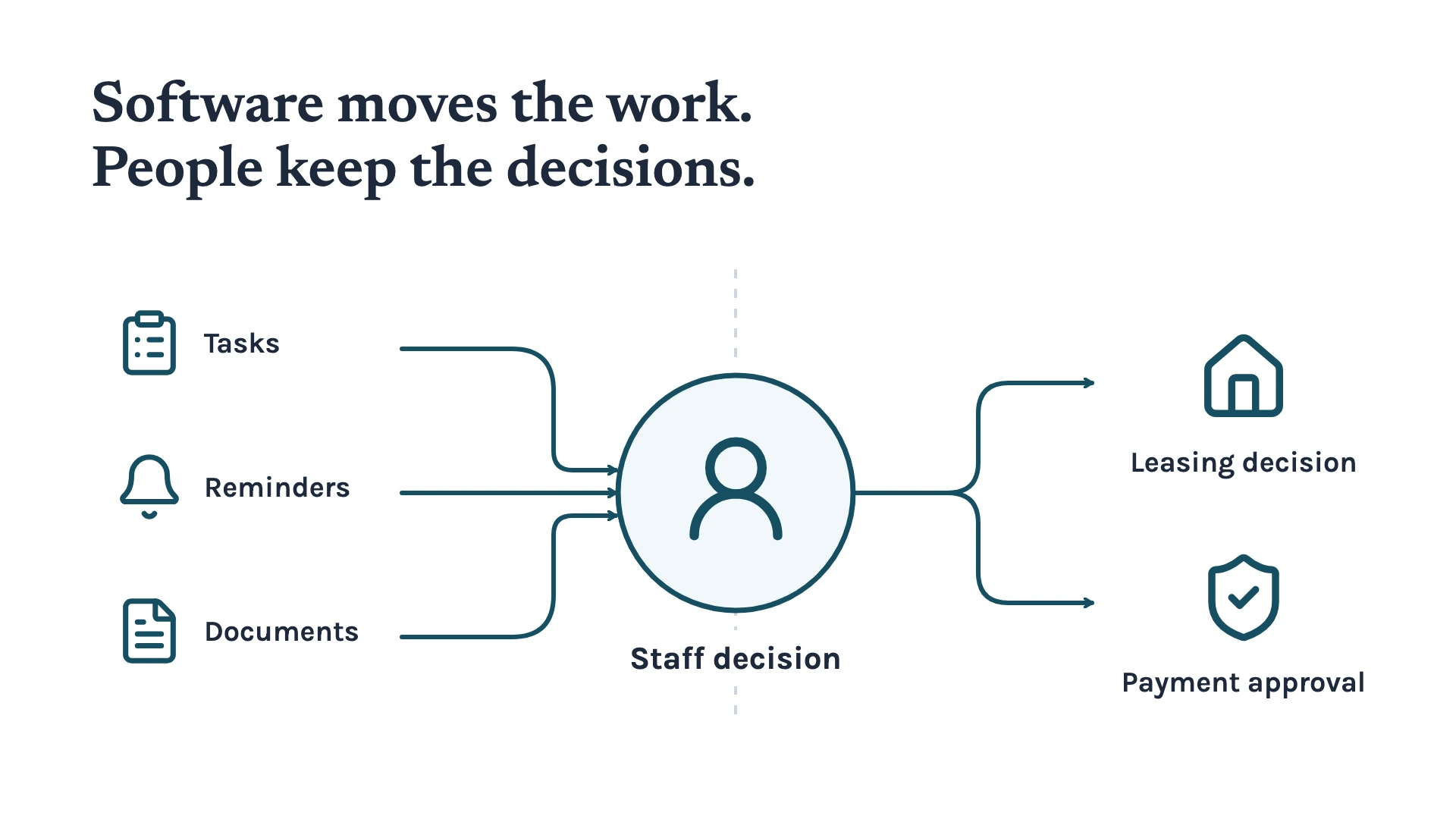
Automation can move information, create reminders and flag exceptions, but it should not take over leasing decisions, payment approvals, trust-accounting responsibilities or other property-management decisions that belong with your authorised staff.
Custom software
Sometimes the workflow you need does not fit neatly into the software you already have. In those cases, custom software can be built around a specific requirement rather than forcing your team to keep working around the limitation.
The result can be a tailored workflow, internal tool or connection between existing systems that fits your operation and gives your team a clearer way to move work forward.
Let’s make portfolio growth easier to manage
You already have systems, people and processes in place to manage your properties. The question is whether they’re working together in a way that supports your team or creates more work for them.
We can look at how work currently moves through your firm, from the initial request or transaction through to completion, and identify where information gets stuck, tasks are repeated or hand-offs create unnecessary work.
From there, we can help you decide what needs to change and what can stay as it is. That could mean configuring your existing software, connecting systems, automating suitable steps or building a custom solution where your current tools have a genuine gap.
The goal isn’t to put more technology between your team and their work. It’s to build a workflow that supports how your firm actually operates.
If you’re ready to make your workflow work better, let’s talk about how your team can handle a growing property portfolio without creating unnecessary work.