Workflow Consulting for Australian Accounting Firms
Improve how work moves through your accounting firm with workflow design, software configuration, and custom integrations.
Contact us
One delay can create a chain of problems
Running an accounting firm means there is a lot of work moving at the same time. Client records need to arrive, preparers need the right information, managers need visibility over the work, and partners need files that are ready for review.
With that amount of work moving through the firm, one delayed review, incomplete record, or unclear billing hand-off can create a bottleneck. That creates more follow-up, more checking, and more pressure on the people responsible for keeping work moving.
When the path between information, preparation, review, and billing is unclear, more of these gaps reach senior staff. Their time goes into unblocking work, answering repeated questions, and finding what should have been ready before the file reached them.
Untangle the bottleneck holding work back
A bottleneck often builds when the team can’t clearly see what needs to happen next. A job may be ready to move forward, but someone is still waiting for client information, system access, a response to a query, or another piece of work to be completed.
A good workflow should make it clear what information and access are needed before work starts, who’s responsible for each stage, and what happens when records, permissions, or other required information are missing. It should also make it clear who takes the work next and whether the required records, reconciliations, workpapers, or review points have been completed before it moves on.
For example, before preparation starts, the team may need ATO authority, ledger and software access, source documents, and prior-year information. Once the work is underway, preparers can work through the required reconciliations, workpapers, and client queries before handing the job to the manager or partner for review.
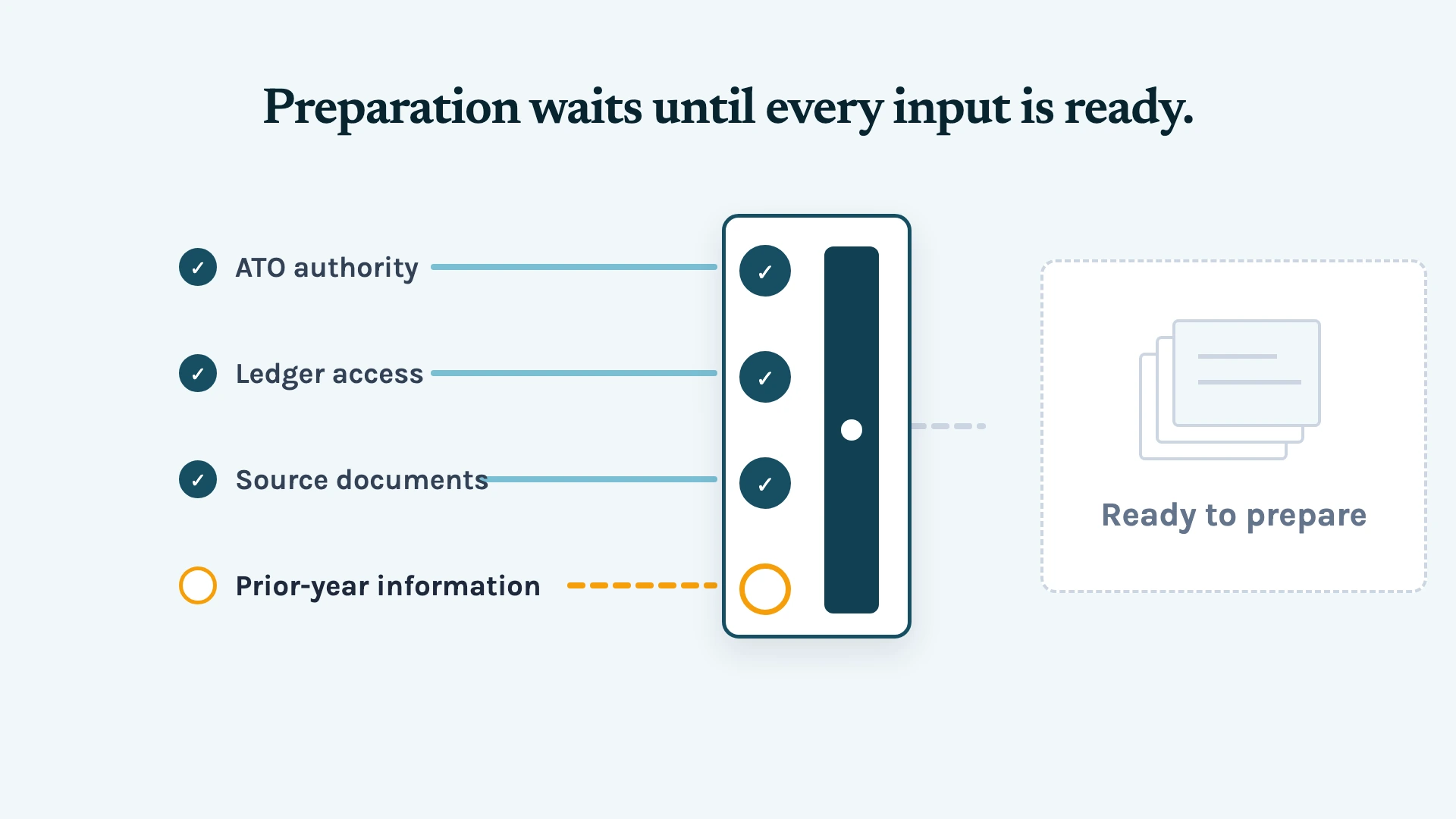
The problem is what happens when one of those pieces is missing. If a client hasn’t provided the required records or a query is waiting for an answer, does everyone know who owns the follow-up? Can the preparer move on to another part of the job, or does the whole job sit there waiting? And when the information finally arrives, is it obvious what happens next?
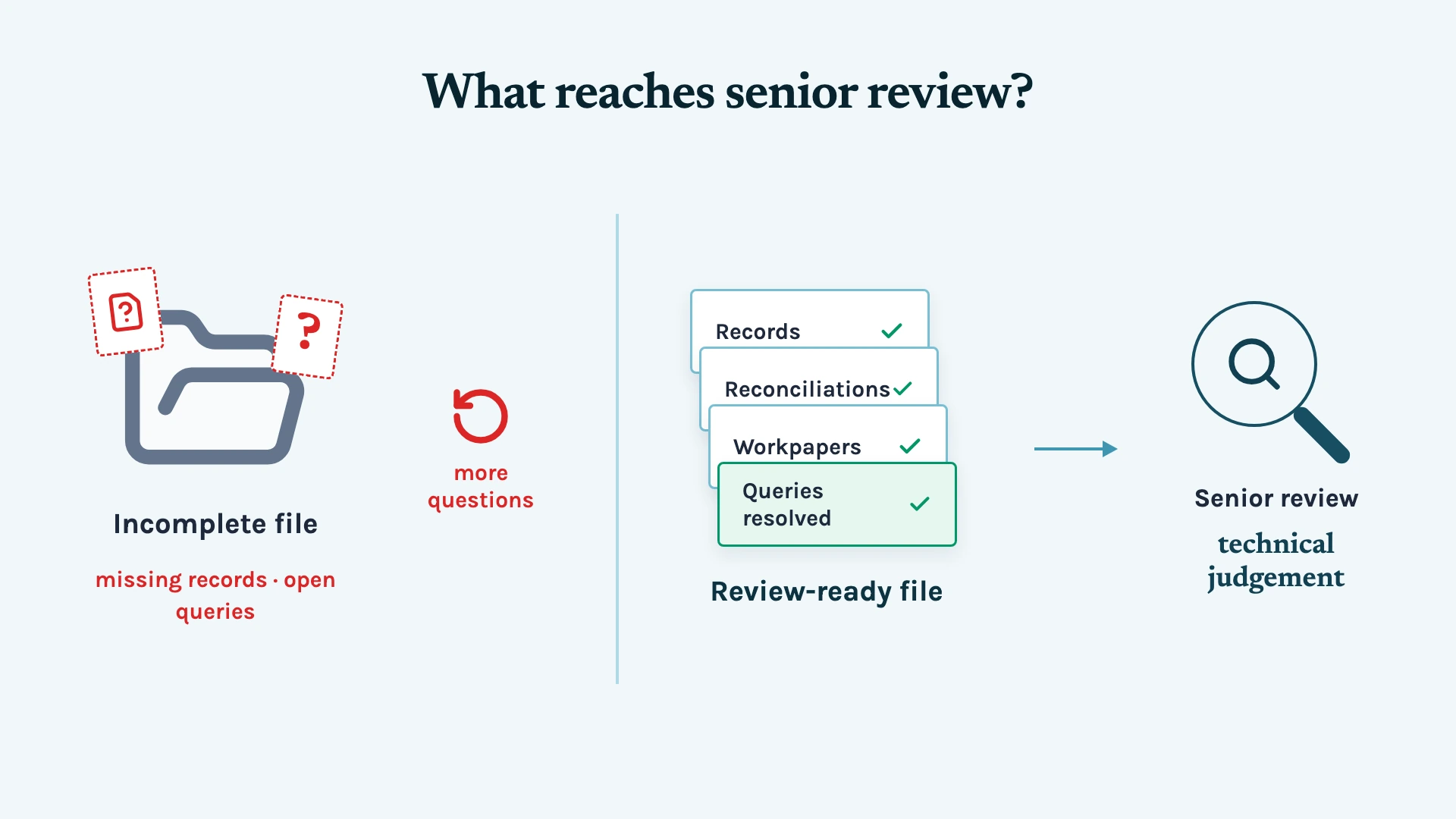
Without that clarity, work can spend more time waiting between stages than being worked on. It also means managers and partners may end up chasing missing information or checking whether basic work has been completed instead of focusing on the technical review and decisions that actually need their attention.
You need to give every job a clearer path
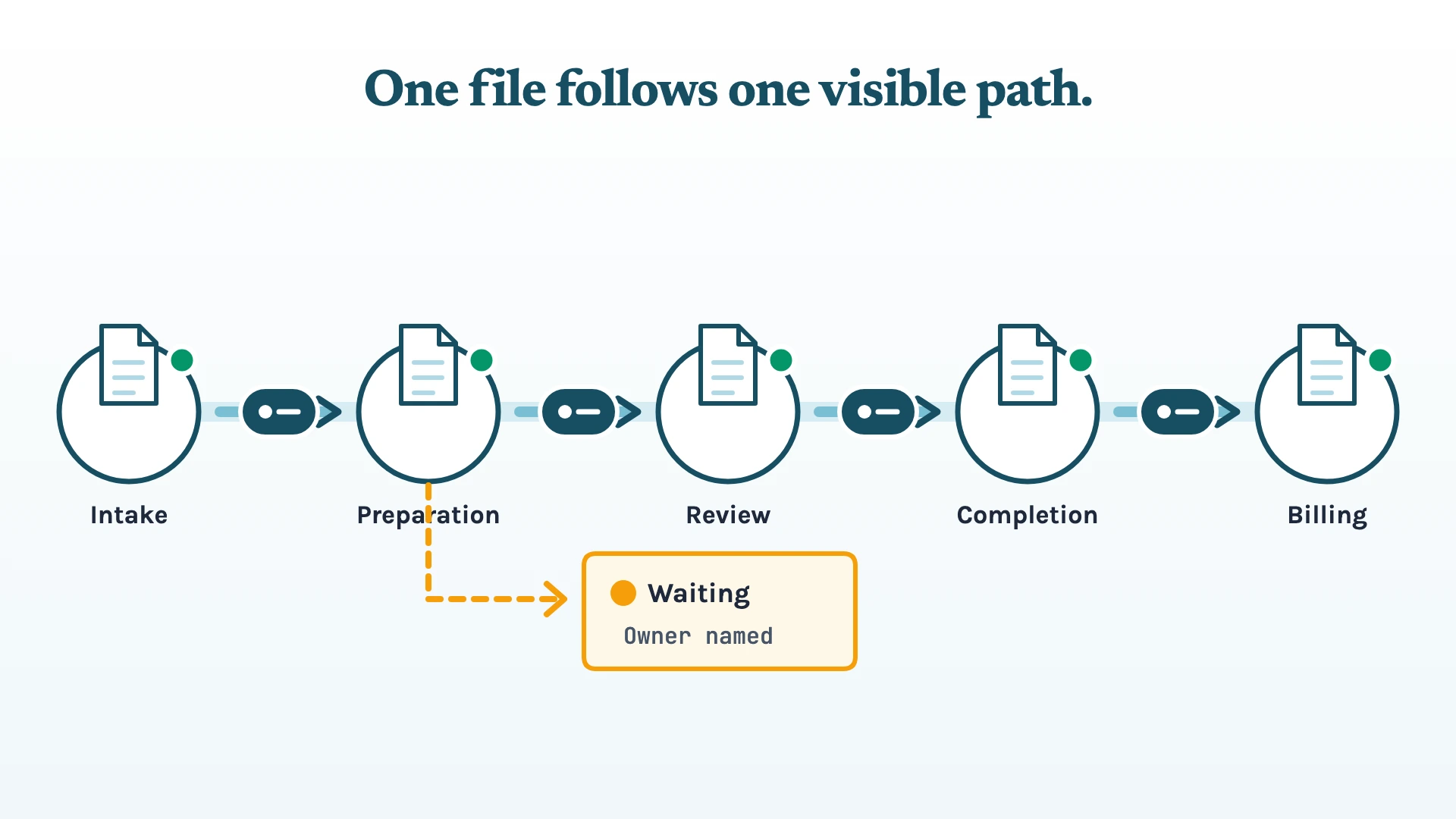
A job shouldn’t depend on someone remembering what needs to happen next. The workflow should show what information and access are needed to start, who owns each stage, what needs to be completed before review, and what happens when something is missing.
We can map that path around the way your firm already works, from client intake and document collection through preparation, reconciliation, workpapers, review, completion, and billing. This can make it easier to see where work is waiting, where a hand-off needs attention, and where a job is reaching review before it is ready.
Workflow Design
We look at the stages where work enters your firm, moves through preparation and review, and eventually reaches completion and billing. At the intake stage, that means checking how client records, permissions, source documents, and prior-year information are collected before work begins.
As the job progresses, we look at how reconciliations, workpapers, client queries, and review points are handled before it moves forward.
This helps us identify where information or access is delaying the start of work, where files are reaching review without what is needed to complete them, and where completed work is waiting before billing. From there, we can design the workflow around the way your firm actually delivers the work.
Software Configuration
Your software should reflect how your firm works.
We configure job stages, statuses, templates, checklists, work queues, and reporting views to support the workflow your team has agreed on.
This gives your team a clearer view of what is ready, what is waiting, and what needs attention, while keeping review and approval decisions in the hands of your people.
Custom Integrations
Then there are the gaps between systems.
Your systems may each handle a different part of the workflow, but the gaps between them can still create duplicate work or fragmented information.
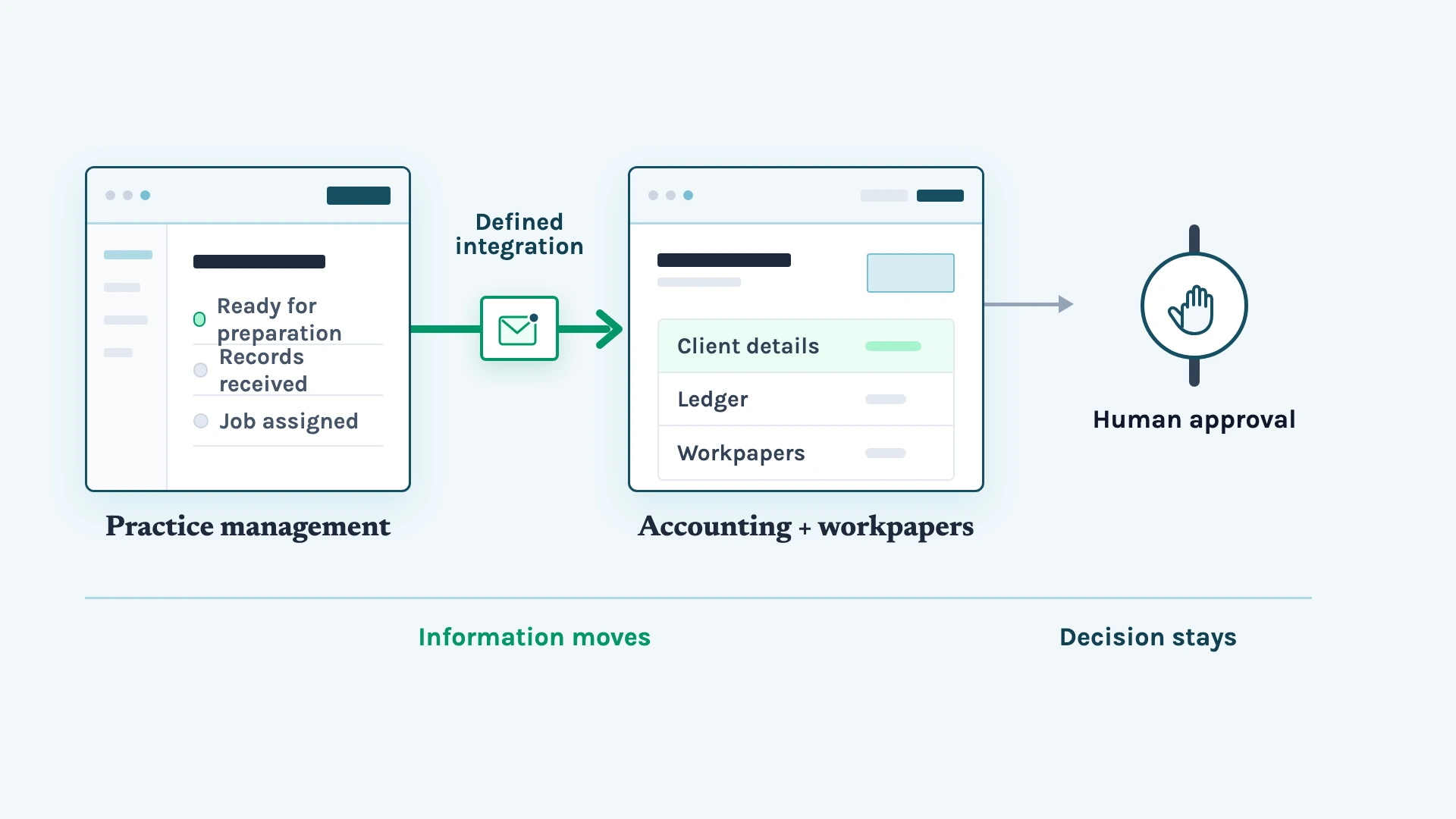
Where there’s a specific workflow need, we can scope an integration across the systems involved, whether that is practice management, accounting, workpapers, documents, client communication, or billing. The aim is to connect the relevant parts of the workflow so information can move between systems without creating another manual step for your team.
The integration should support a defined part of the workflow rather than add another layer of complexity. Your team keeps control of the decisions and final approval, while the systems handle the process around them.
Let’s start with the workflow that needs attention
You don't need to change everything at once. A workflow problem often starts in one part of the process, whether that is getting client information in, moving work through preparation and review, connecting systems, or getting completed work through to billing.
That gives you a place to start. We can look at how that part of the workflow currently works, what is causing the delay or extra work, and what needs to change around the systems and processes your firm already uses.
We aren’t trying to take professional decisions away from your team. Your firm retains professional judgement, client relationships, review decisions, and final approval. Our role is to make the workflow around those decisions clearer and easier to manage.
So, tell us where work is getting stuck, and we can help you work out what needs to change before the problem holds more work back.