Bookkeeping Workflow Automation Consulting
A bookkeeping automation specialist who helps firms reduce document chasing, speed up exception resolution, and move quality review earlier in the workflow.
Contact us
Your Tools Work. Your Workflow Doesn't.
Your firm already uses Xero, Dext, and bank feeds. The software handles routine transactions well enough, but every month the same problems come back. You're still waiting on receipts, no one can code some transactions with certainty, and files sit incomplete until someone senior spots what went wrong.
The software works fine, but the workflow around it breaks down as your client list grows.
At 12 clients, one person can keep all the details in their head. At 40 or 50, that stops working, and the cracks show up everywhere. 1 Staff handle the same type of work differently, and exception queues grow without clear owners. Month-end becomes a crunch because no one spotted the issues earlier.
A bookkeeping automation specialist redesigns how work moves through your firm. The aim is to get your existing tools doing the job you bought them for.
Document Chasing That Compounds Across Your Portfolio
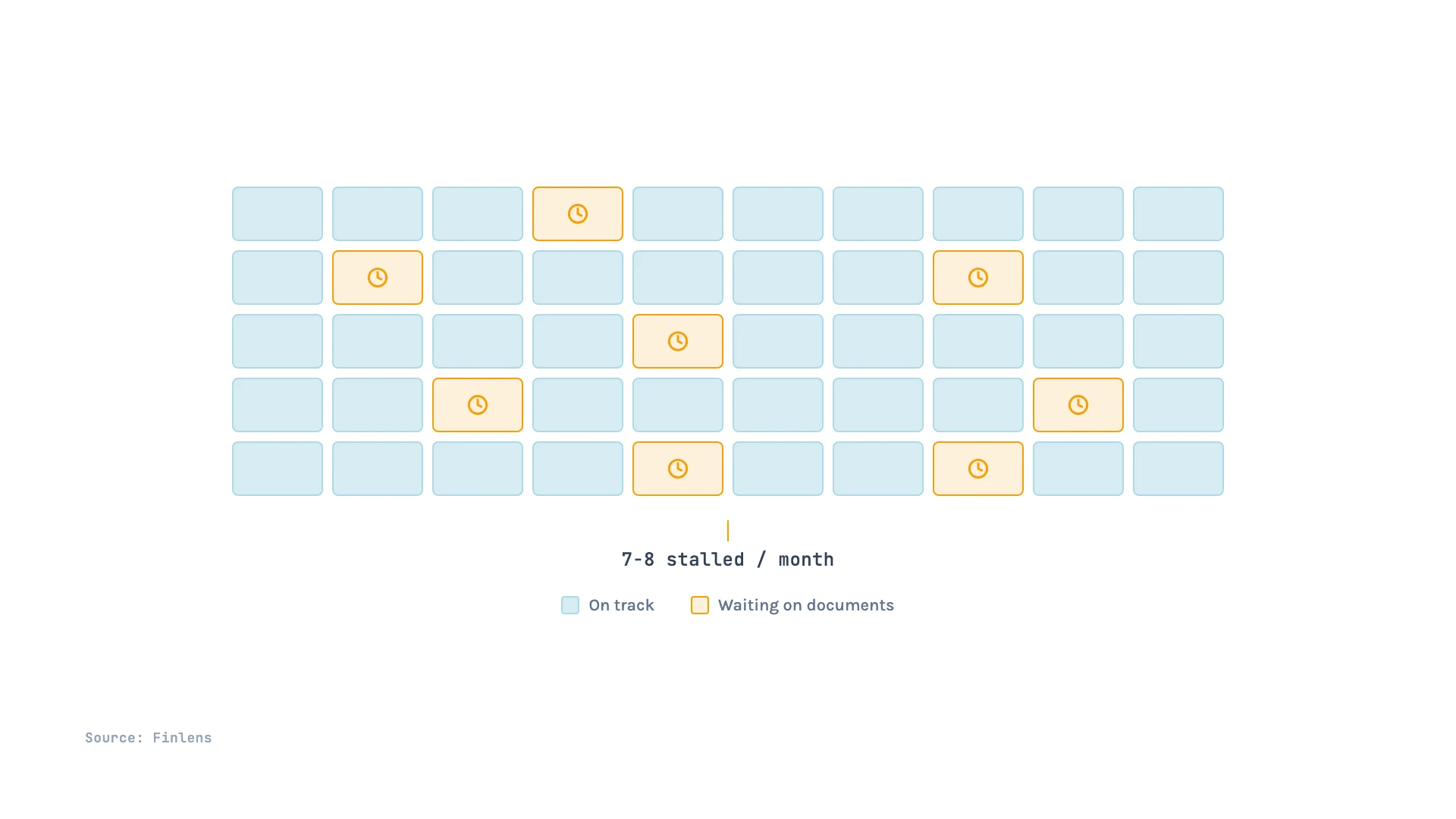
Every firm has clients who don't send their documents on time. 2 At a 15% late rate, a 50-client practice has 7 or 8 stalled files each month. Each one needs follow-up emails, phone calls, and manual downloads. Multiply that across your team and it adds up fast.
Most of the time goes into working out which documents are still missing and checking what the client has already sent you. Then you still need to pull the right transaction details into the request. That investigation can take an hour per client before anyone starts drafting.
We've built and tested a workflow that reduces this to about five minutes. The system checks each client's transactions, identifies what's missing, and prepares a consolidated receipt request as a draft. Your bookkeeper reviews the draft, changes what they need, and sends it.
When the client replies with documents, the system matches them against open transactions by vendor, date, amount, and currency. Clear matches get a high-confidence tag, and uncertain ones go to the bookkeeper for review. Your team makes the final call on what gets posted.
What you get is a workflow configured for your firm. It uses the tools you already have and follows the way your firm operates.
Exception Resolution in a Fraction of the Time
After the initial coding pass, some transactions end up in a question-mark pile. They include mismatched amounts, partial payments, split transactions, refunds routed to the wrong account, and items that could sit in two or three categories.
In most firms, these sit in a shared queue with no clear owner, and staff skip the hard ones. By month-end, someone has to rush through all of them under time pressure.
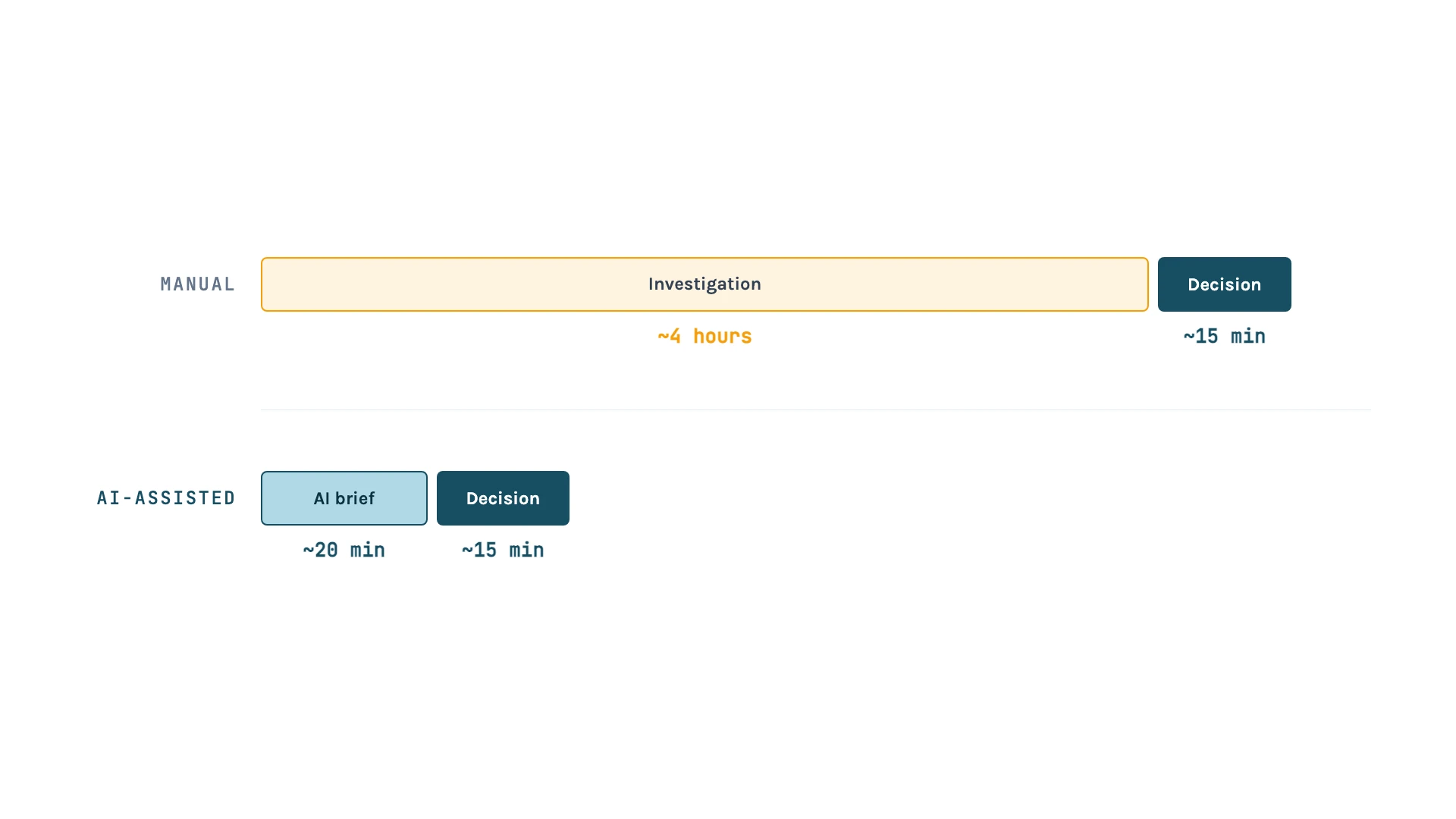
The investigation is the bottleneck, and it takes longer than the decision itself. A bookkeeper needs to check historical transactions for the same vendor and search across other client files for similar patterns. Then they look up the supplier online and check whether any contracts or invoices in Gmail, OneDrive, or Google Drive explain the charge. That process can take half a day per exception.
We build systems that do the investigation for your team. The AI searches transaction history, checks documents across your connected systems, and prepares a brief for your bookkeeper. It lays out what it found, what it couldn't resolve, and what it recommends.
Your bookkeeper still reads the brief and makes the call. The investigation that used to take half a day is finished before they open the file.
Move Quality Review Earlier
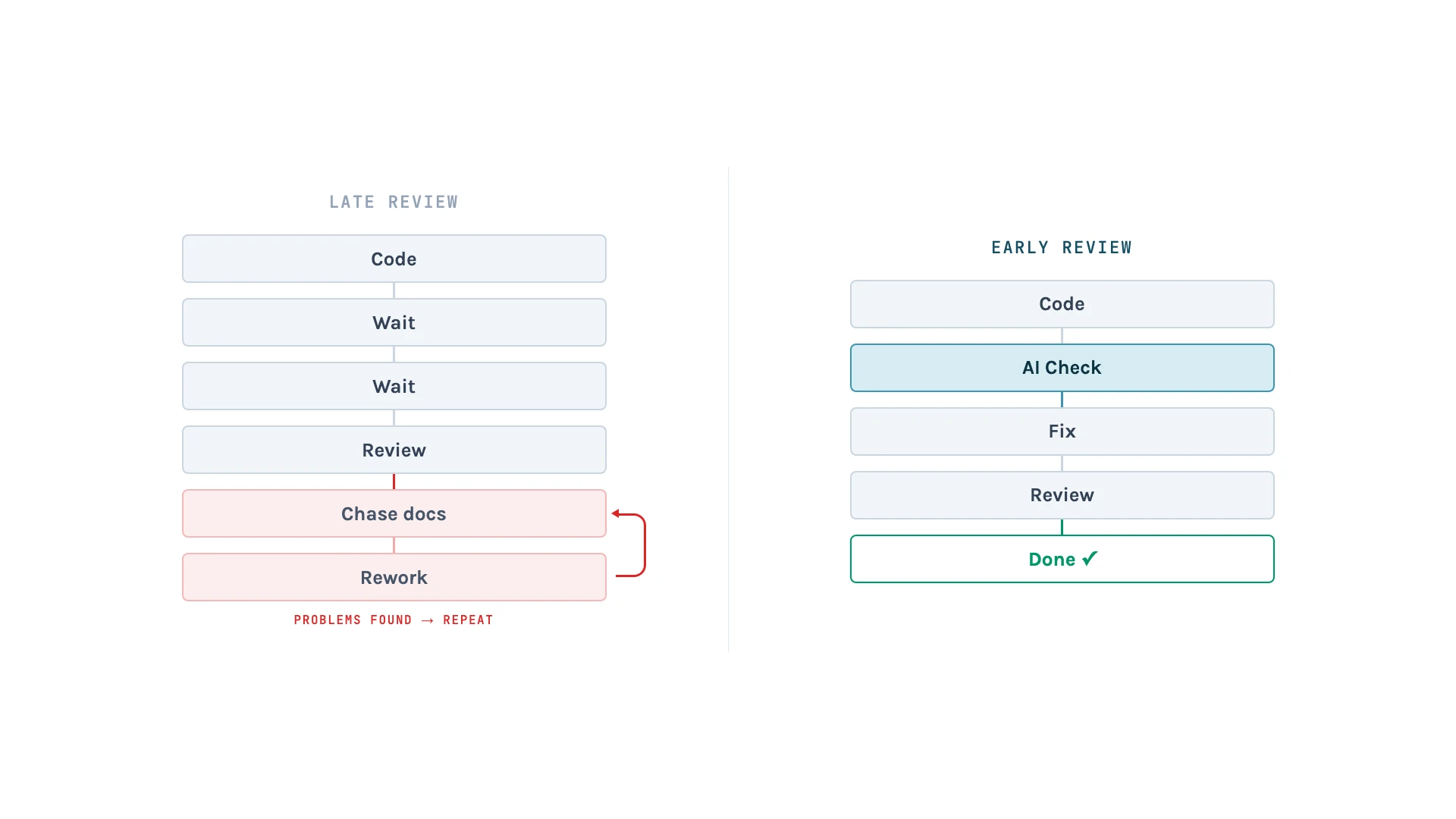
Most firms run quality review at the end, often with workflows that live in the owner's memory. A senior bookkeeper or practice manager opens a completed file, checks the coding, finds problems, and sends it back. This is where missing documents resurface, exception items get flagged again, and rework starts.
Late review is expensive because it creates a second round of the same problems you already dealt with. Your team starts following up on documents again, and exception items that should have been resolved weeks ago need investigation under deadline pressure.
We help firms move an interim review step earlier in the cycle. An AI assistant can run a first-pass check on a file after the junior bookkeeper finishes coding. It spots transactions that look inconsistent and identifies potential miscodings based on your firm's chart of accounts and historical patterns. Anything that needs a senior reviewer's attention gets raised before the file goes further.
This doesn't replace the senior review, but it makes the senior review faster. Most of the obvious issues are already resolved before the file lands on their desk. Your senior staff spend their review time on the calls that require experience.
What We Deliver
We inspect a representative set of your client files and document how work currently moves through your firm. We measure where time goes, where rework starts, and where files get stuck.
Then we configure your existing tools to handle the routine work: Xero bank rules, Dext supplier mappings, document collection workflows, and exception routing. 3 We design the process changes your team needs to follow and train your staff on the new workflow.
The work covers three areas across your practice.
Document collection. Automated tracking of what's missing, consolidated client requests, and receipt matching when documents come back.
Exception handling. AI-assisted investigation with structured routing to named owners, resolution timeframes, and escalation paths.
Early review. Interim quality checks that catch problems before they reach the senior reviewer.
We track results compared to the baseline we established at the start: hours per client file, exception queue age, rework rate, and turnaround time. You can see what changed and then decide whether further work is worth doing.
Your firm keeps all accounting decisions, client relationships, and approval authority. We deliver the workflow design, tool configuration, staff training, and verified improvement.
Get in Touch
If your firm is spending too much time following up on documents, clearing exception queues, or fixing late-stage rework, we should talk.
Book an introduction meeting and walk us through what's causing the most friction. We'll tell you whether we can help and what the next step would look like.
References
- Institute of Certified Bookkeepers (2024). ICB Australia Bookkeeping Industry Survey. https://www.icb.org.au/cms/delivery/media/MCARNECHBH55AK5P3NZQZ65KCKWQ
- Financial Cents (2024). 2024 Report: The State of Accounting Workflow Automation. https://financial-cents.com/resources/articles/2024-report-state-of-accounting-workflow-automation/
- Dext (2026). How to Use Supplier and Customer Rules in Dext. https://help.dext.com/en/articles/216125-how-to-use-supplier-and-customer-rules-in-dext
Related guides
View bookkeeping guidesHow Bookkeepers Can Stop Chasing Clients for Documents
Learn how to reduce bookkeeping client document chasing with client portals, automated reminders, clear deadlines and a better onboarding process.
7 Warning Signs Your Bookkeeping Process Is Broken
Learn about the 7 warning signs your bookkeeping process is broken, from late documents and inconsistent coding to recurring errors and manual workflows.
What Does Bookkeeping Automation Actually Mean in 2026?
Learn what bookkeeping automation means in 2026, how it works in Australian businesses, what tasks it can automate, and where professional judgment remains essential.